
Frequently Asked Questions
Drilling a borehole is a significant investment — it’s completely natural to have questions. Here are straightforward answers so you know exactly what to expect.
A hydrogeological survey — using local geological maps, existing boreholes and geophysical instruments such as PQWT and a proton magnetometer — identifies the best drilling spot for water and the most likely aquifer depth.
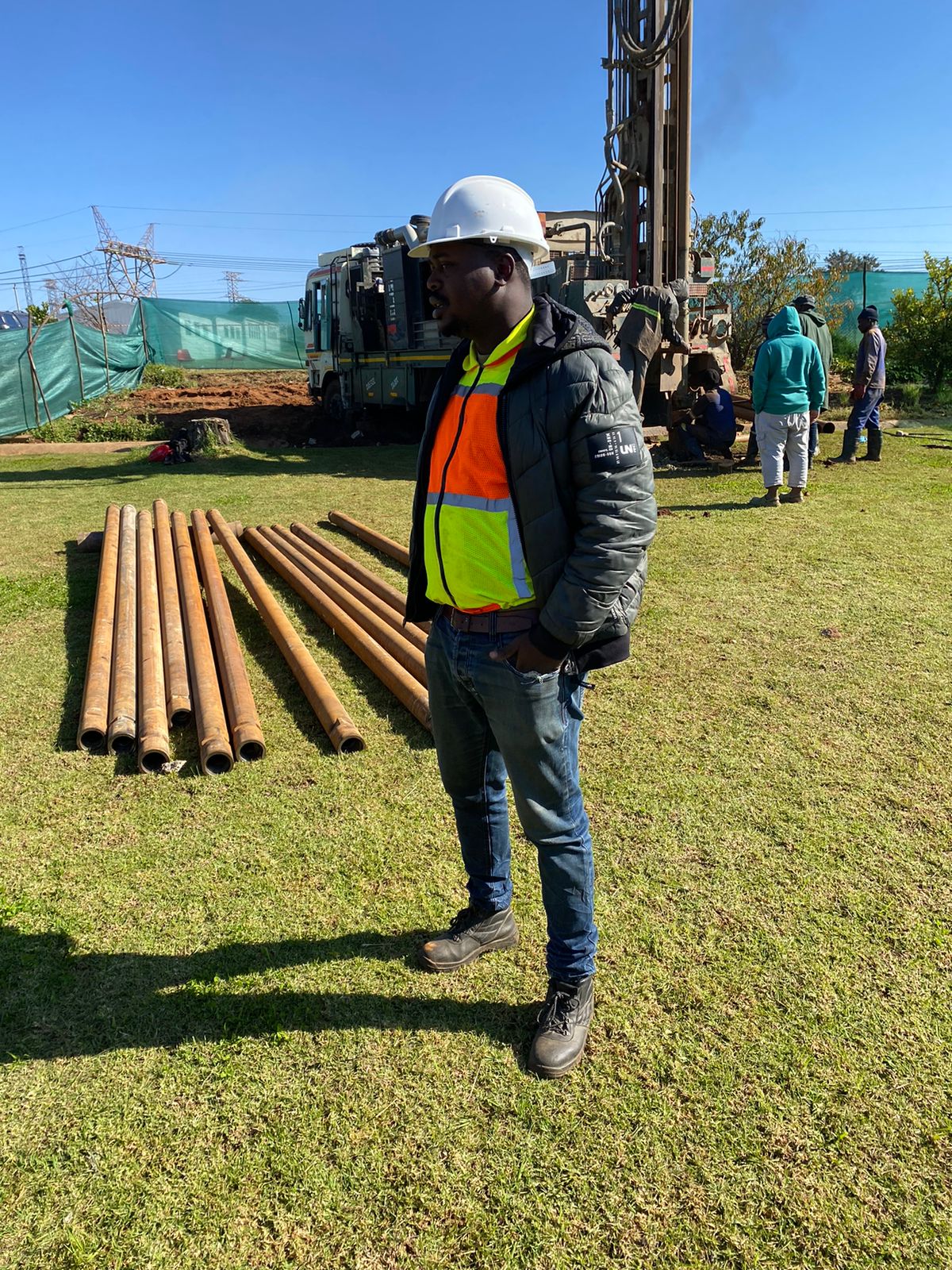
We use a truck-mounted DTH rig to drill, then install casing to prevent collapse and gravel-pack filters for clean water flow. Each stage is logged and executed by certified technicians.
Depth varies — typically 30–150 metres, and up to 250m where required — depending on the local geology and aquifer levels identified in the survey.
Drilling usually takes 4–6 hours, with additional time for pumping tests and installation. The exact duration varies with ground conditions.
Honestly, no reputable driller can guarantee water — nature is unpredictable. We rely on scientific data for the highest chance of success and guarantee our workmanship, equipment and adherence to the quoted drilling depth.
This is rare after a thorough survey. In a dry hole you won’t be charged for the pump, piping or full casing, but you are responsible for the per-metre drilling costs due to labour, fuel and equipment use.
We typically recommend a submersible pump, sized according to the borehole yield and your household or operational water consumption (based on Total Dynamic Head calculations).
Borehole water can be very safe, but we strongly recommend SANAS-accredited testing to SANS 241 standards. Depending on the results, a filtration or purification system may be necessary.
A well-constructed borehole can last 25–50 years or more with proper maintenance. Pumps and equipment may need earlier replacement.
Key factors include drilling depth, geological conditions, casing materials, pump type and site accessibility. We provide a detailed, transparent quotation after the site visit.
A minimum clear area of about 6×6 metres is generally required for the rig and equipment, plus a 3-metre-wide access route for the truck.
Maintenance is minimal — occasional pump checks, water quality tests and filter cleaning. We recommend an annual inspection, and we offer affordable maintenance packages.
Yes. An existing borehole can often be deepened if the yield is insufficient, provided the current casing is sound and the geology permits.
Yes — a reliable, independent water source significantly enhances property value and marketability.
Permit requirements vary by region. Borehole registration, flow-meter reporting and any environmental permits are the client’s responsibility, and we are happy to advise and assist.
Yes. The system integrates with existing plumbing, usually via a storage tank and pressure/booster pump, with backflow prevention to remain SANS-compliant.
Still have a question? We’re happy to help.